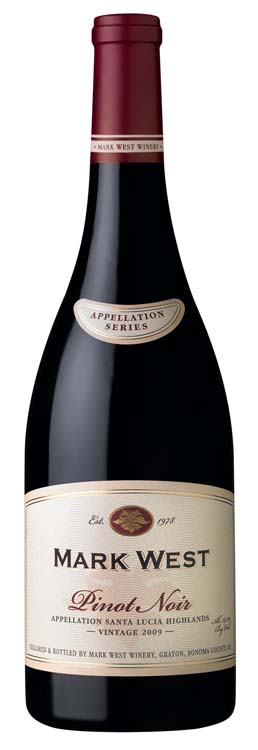
Mark West 2009 Russian River Valley pinot noir wine review

13 10 2010

Hi!  Today we review another Mark West pinot noir, a California red wine that costs around $20 a bottle.

Bottom line: A yummy pinot, but at $20, not recommended.

OK folks, I’ll keep this short.  You’re forgiven if you’re thinking. “Hey Wineguider, shut up already about Mark West!!” — this is the 3rd I’ve reviewed — but I have good reason for my focus on them: that amazing 2008 $9 pinot with the orange label.

This $20 pinot is also good, although its label is beige: it’s fruity, it’s a bit minerally, and it’s balanced.  It tastes like real pinot noir.  And it’s a beautiful ruby red color.  However, it doesn’t have serious depth or strength of flavor, and doesn’t have a lot of complexity.  At $20, I start to expect these things.  Another problem: I enjoyed it with a spinach salad that included hard boiled eggs and bleu cheese, and honestly, the salad overwhelmed the wine. 

I love their $9 pinot from 2008, and I liked their $17 2009 Santa Lucia pinot a lot, but at $20, this Russian River pinot is unfortunately:

Not recommended.

Next!


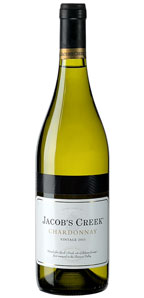
Jacob’s Creek 2009 chardonnay review – WHAT THE?

12 10 2010

Today we look at a chardonnay from Australia that will cost you only 6 bucks.

I can’t restrain myself, ladies and gentlemen, this white wine from south-eastern Australia is AWE-SOME.  At a price that is almost laughable, you get a smooth white wine with some real character.  A crisp, tart, tangy, enjoyable wine with some true chardonnay taste and aromas, combined with a little extra citrus and minerality, yet almost no oak and almost no butter.   Almost nothing like a typical California chardonnay, it actually acts more like a sauvignon blanc in some ways.  I literally can’t stop drinking it.

Now I admit, Jacob’s Creek 2009 chardonnay is strange in one way:  one bottle that I bought had a screw top.  Another one had a cork.  Same wine.  Same year.  Same STORE.  What the hell!?  I don’t know, but I can tell you this:  the bottle with the cork tasted better.  It was smoother.  And it lacked the slightly over-tart, slightly kerosene-tinged character of the screw top.  But most importantly: both bottles were incredible for a $6 wine.

This aussie is an obvious, flat-out “Best Value” winner, and is:

Jacob's Creek chardonnay review

Highly recommended.


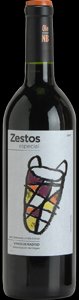
Zestos especial 2007 wine review

10 10 2010

Today we review a Spanish wine that costs only $9 a bottle.

Bottom line: Terrific if you enjoy dry red wine!  This wine wins a “Best Value” designation.

OK folks, this one verges on incredible.  It’s 85% tempranillo and 15% syrah (which is the same thing as shiraz).  It’s made in Spain.  It has cool modern art on the label.  And it’s only 9 bucks.  Even if you pay $12, it is still a very good wine for the price.

It’s spicy, and very dry when it first hits your mouth.  But after drinking it for a little while you will begin to notice the dark fruit in there: plums, dates, maybe some black raspberry.  All of them, “not quite all the way ripe yet.”

One thing: buckle up if you’ve never had Spanish wine before, because it has WAY more tannins than the typical U.S. wine.  Tannins are what give you the feeling that all the moisture is being sucked out of your mouth.  Associated with red wine, they are the result of grape skins being left in during portions of the fermentation process. 

I suggest letting Zestos breathe for a couple of hours. Pouring the bottle into a decanter (any container that lets more of the wine’s surface touch air) speeds this up.  Breathing helps to ripen those “not quite ripe” fruit flavors.

Zestos isn’t complex, it’s not going to pair well with everything, and it’s not a “crowd pleaser” due to those extra tannins.  But at $10, it’s a great wine to sip alone, or to enjoy with steak, lamb or anything spicy from Italian to Thai.  And so, it is a “Best Value” wine, and is:

Zestos especial wine review

Highly recommended.


William Hill 2008 chardonnay review

6 10 2010

Today we review a California chardonnay from Napa Valley that costs about $20 a bottle.

Bottom line: Recommended for those who like buttery, oaky chardonnay.  Did I mention buttery?

OK I have a confession:  I have something against most California chardonnays.  That being, I hardly ever like them.  The ones that are remotely affordable are usually way too oaky and they feel sort of clogged, flavor-wise.  Clogged with what?  I don’t know — strange, artificial-tasting flavors.  

Now, for a ray of hope.  Today’s chardonnay is a bit different: it’s extremely buttery, and yes it’s pretty darn oaky, but it’s not overwhelmed with those weird, fake flavors I was mentioning.  So despite my bigoted prejudice, I think William Hill chardonnay from Napa Valley is actually pretty darn good.  And I’m really glad that the winery sent me this sample to check out.  

The downside?  It’s not crisp or refreshing, because there is so much deep, intense flavor.  And yet, it doesn’t do anything really wrong.  For $20, that’s special.

As for the Wine Review Tasting Notes — you know, “braised honeydew melon with hints of duck taco” — they aren’t that important here, because William Hill tastes similar to every other decent California chardonnay, with its flavors presented in a way that feels more natural, and less weird to your Wineguider.  But two other things stand out:  it’s a little bit minerally, and it’s a bit spicy.  Yum.  More William Hill, please?

You can now store your ice cubes safely in hell, because your Wineguider has decided that this $20 California chardonnay is:

William Hill chardonnay review

Recommended.


Extra!! Mark West “Santa Lucia” pinot noir review

3 10 2010

Today we review a 2009 pinot noir from the Santa Lucia area within California’s central coast, which will cost you around $16.  My bottle came free directly from Mark West.

Wow.  Let’s get to the point — I cannot think of another $16 pinot noir that is this entertaining, this notably good.  (The same is true of the “plain” Mark West, which has an orange label.  Nothing at its lower price point tastes as much like real pinot noir.)  And yes, Mark West Santa Lucia is better than the “plain” Mark West: it’s more silky, tastes more mature and complex, and some of the rough edges of the “plain” Mark West have been sanded down without losing that very real, true, pinot noir character.  You’ll taste rose petals, cola, raspberry and cherry, very bright spices, and a little bit of oak and minerality.  This medium-bodied wine is perfect for drinking on its own, or with just about any food other than the heaviest of meats.

Drawbacks?  It’s pretty darn hot, so it delivers an “alcohol!!” punch in the mouth.  It’s definitely not your father’s light, see-through pinot noir.  This very real pinot noir is another clear “Best Value” winner, hence the guy laughing at the slot machine.  Mark West Santa Lucia Highlands is:

Mark West "Santa Lucia" pinot noir review

Highly recommended.


Grayson Cellars cabernet sauvignon review

1 10 2010

Today we review a $10 red wine from California.

Bottom line: This one doesn’t taste bad, but it’s not good enough to recommend.

Uh oh.  OK folks, this will be quick.  Grayson Cellars 2009 cabernet sauvignon tastes OK, but it’s too sweet, kind of generic, and it doesn’t really taste like a cabernet sauvignon.

The reason for the “uh oh” — it tastes similar to their pinot noir, which your Wineguider recommended.  So it makes me wonder if THAT wine also tasted too sweet and generic to recommend.  I mean, a pinot noir that tastes similar to the same winemaker’s cabernet? Really? You’re recommending that? Well, uhh. . . yeah, I think. I mean, it wasn’t the DEFINITION of pinot noir, but it was pretty close.  And yeah, it was a little generic and sweet… but it was OK!  I’m pretty sure!

Oh well.  At least we have clarity for today’s review: the 2009 Grayson Cellars cabernet sauvignon is a no-go.  Although it’s easy-drinking and not bad by any means, it just isn’t dry enough, “cabernet” enough, or delicious enough to recommend.

Next!


Benziger Sonoma cabernet sauvignon review

29 09 2010

Today we review a 2006 California cabernet that costs $18.

Bottom line:  A nice red wine, and a close call, but at $18 it’s not quite good enough to recommend.

Benziger is a very cool winery.  The official name is “Benziger Family Winery.”  I like that.  Go to their website, and you are treated to a video on the first page that will teach you what “whole cluster” pinot noir means.  Cool!  All of their wines are certified for green farming practices.  Each vineyard at which they source their grapes is certified “sustainable”, “organic” or “Biodynamic”.  And all four of Benziger’s own vineyards are Biodynamic, the most organic of the organic, sort of like chemical-free, natural farming on steroids.  Wait — bad choice of words there.  (And I should note, some people allege that Biodynamics is a bunch of hooey, a subject that’s WAY beyond the scope of your Wineguider’s “expertise”.)

Anyway, the cabernet we are looking at today is definitely not a bad wine.  It feels nice and rich, it tastes like “real” cabernet sauvignon, it’s dry, and oaky, and not too sweet, and it has a very nice spiciness to it.  But, it tasted a little bit thin, and a tiny bit sour, compared to some others I’ve tried in this price range.

So, I feel there may be better ones out there for less money.  Maybe Benziger’s cool “green” theme causes their wine to sell for a few dollars more, I don’t know.  Although the Lander Jenkins cab tastes sweeter in a way that makes Benziger seem like the far more serious option, I’d often be tempted to choose Lander Jenkins because it’s only $13, as low as $12 in some stores.  

With one big exception –  if I am throwing a party for Earth Day, or any other kind of green/organic themed event, it’s going to be Benziger all the way.

Next!


Marchese Antinori chianti classico riserva 2004 review

28 09 2010

Today we review a 2004 chianti that costs $30 a bottle. 

QUESTION!   What to buy if you’re making a romantic Italian dinner for a seriously hot date?  Answer – something Italian!  Although many U.S. reds will pair wonderfully with your meal, nothing gets the romance going like an Italian.  

There are many kinds of Italian wines, but if you’re starting out, a chianti is a safe bet — they hardly ever taste bad, they are affordable, and most people have a good association with the name.   But what IS chianti?  It’s not a grape.  It’s a blend of three or four grapes, but always most prominently sangiovese.  It’s made in the Chianti area of Italy, in Tuscany.  There are several “grades” of chianti, and it usually goes like this:

          Good:  chianti

          Better: chianti classico

          Best: chianti classico riserva

Then there’s “chianti superiore”, which is supposed to be even better, but is rare.  My local Total Wine has only one. 

So today we have a $30 chianti classico riserva which is very warm, extremely dark red, almost black, tastes very full and extracted, and is VERY very sumptuous in the mouth, with perfect texture.  But there’s a problem: too much oak.  Drinking it is like sucking on a 2×4.  It’s hard to taste the grapes, much less describe them for you.  Although it is very romantic, has great texture and has a sexy, upperclass label, this Italian is unfortunately:

Not recommended.   

Next!

P.S.  Hey WINEGUIDER!!  What about my dang date?!?!   Well, for a moderately pricey chianti that will taste good and show that you really cared about the meal, I suggest you buy the little brother to the above wine, another Antinori offering called Peppoli chianti classico, which costs $24.   I will do a full review soon.


Lagaria pinot grigio review

25 09 2010

Today we look at a pinot grigio from Italy that costs $9 a bottle.

Bottom line:  Love it!  An  affordable and very drinkable pinot grigio.

Lagaria is a hot little commodity these days because it’s not super well known, yet it’s very good and it’s very inexpensive.  So, you can serve it at all your parties, or bring it to your friends’, and everybody will think you’re a wine expert — yet you hardly spent anything on it.  (Or, like one high-end Italian restaurant around here, you can put it on your menu at $7 a glass and people will drink your store room dry, even though the stuff is only $9 a bottle if you know where to find it.)

Why is it so good?  As we have said, pinot grigio is often so light and clean that it barely tastes like anything.  Well, Lagaria has some real flavors — zippy lime and other citrus flavors with some pleasant mineral inflections on the finish, as one short online review said.  BUT, it’s still light and clean (UNlike the dreaded Estancia pinot grigio, which is packed with many flavors and ends up tasting heavy, confused and weird.)   By the way, I hereby pledge never to use the word “inflections” in a review again.

Lagaria is fruity, and tangy.  It tastes like real pinot grigio.  It has a nice, coherent feel in your mouth that speaks with one voice, and it stays interesting while being refreshing.  It’s easy to drink (I’m reminded of the Coneheads beeping out the words, “mass quantities”).  And finally, it’s a little bit on the sweet side for a pinot grigio, but it’s not too sweet. 

Lagaria pinot grigio reviewThis one’s a crowd pleaser.   Highly recommended.


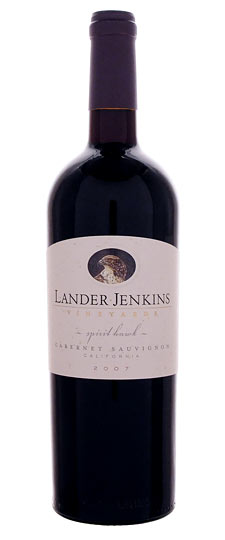
Lander Jenkins “Spirit Hawk” cabernet sauvignon review

22 09 2010

Today we look at a 2007 red wine from California that lists for $15, but I found for $13 (and later found for $12).

OK ladies and gents, this new cabernet sauvignon is DARN good for only $13.  The Lander Jenkins “Spirit Hawk” wines — they produce only cabernet and chardonnay, I like that — are from Rutherford Wine Company, maker of the usually-delicious Rutherford Ranch cabernet. The grapes in this cab were sourced mostly from Paso Robles, an area producing such rich, deep, satisfying red wines at such bargain prices that it seems it might just swallow Napa Valley whole within our lifetimes.

However THIS cabernet is not super rich and deep — it’s a little bit lighter, brighter, sweeter, and noticeably more elegant than other Paso Robles reds I’ve had.  Lander Jenkins is delicious, with the obligatory California dose of oak, but not so much as to hide the flavor of the wine itself:  you get a sort of blackberry and rhubarb pie, balanced by pleasant acidity and well-behaved tannins.  Nice!  And a clear Wineguider “Best Value” wine.

Is there a downside?  Well, Lander Jenkins is a little bit on the fruity and sweet side for a California cabernet, and it doesn’t taste exactly like a more expensive, true, tannin-filled classic California cab.   But it’s close.  So, I suggest you buy some high quality ground sirloin, obtain some killer spicy brown mustard and fresh lettuce and tomatoes, and as you complete your cookout menu with your favorite side items, snag a few bottles of this lovely cab for a late summer / early fall dinner outside.  I think you’ll be glad you did.

Lander Jenkins cabernet sauvignon reviewRecommended.


Hob Nob pinot noir review: REVISITED

21 09 2010

Hi!  Today, we re-examine Hob Nob pinot noir, a cool designer bottle from France that was $11 for our last review.  We concluded that Hob Nob tastes better than many other cheap pinot noirs, but it is often too sweet and is inconsistent from bottle to bottle.  It couldn’t be recommended at $11.

But then I saw it selling for only $8 — holy mackerel, time for a re-review!  So — this wine smells like, not cherries, but “cherry flavor.”  Giving it a whiff, I’m not sure if I’m about to enjoy a glass of wine, or suck on a Luden’s cough drop.  That’s fine — I’ve enjoyed many wines with unusual aromas.

As for taste, a young wine drinker who drinks “sweet nothing” wines might like this a lot.  Hob Nob is fairly sweet, but not offensively so. For $8, it even has a nice little complexity to it, with a trace of tannins.  More prominently, it has a heaping helping of cherry, with a cameo appearance by strawberry and Kool-Aid “black cherry” flavor.  My throat feels better already!

But to me, the flavors in this wine seemed confused, mixed up with a hint of something hard to identify, but which you don’t really want in your mouth (isopropyl alcohol? sterno??).  Finally — the kiss of death for most cheap pinots — Hob Nob pinot noir tastes almost nothing like pinot noir.  It’s good for only $8, but these issues lead me to decide that it is:

Not recommended.

Next!


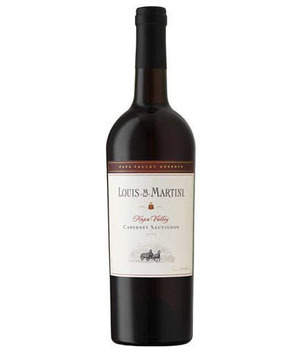
Louis M. Martini Napa Valley 2006 cabernet sauvignon review

17 09 2010

Today we review a 2006 Napa Valley cabernet that will cost you $20.

Bottom line:  Good!  Maybe a bit “normal,” but with the right food, really shines.

IMPORTANT NOTE:  This review deals with the Louis M. Martini “Napa Valley” cabernet, which goes for around $20.  NOT the regular ol’ Louis M. Martini cabernet, which is like $11, and not in the same league. 

Here with the “Napa Valley” cabernet, we have a very moderate, somewhat generic and very nice little red wine.  It has a nice, reasonable amount of tannins, maybe more than the average wine, but not beyond the pale.  It smells nice and does nothing wrong.  It’s not very complex.  It has that familiar California tannin bite and dryness.  It tastes like a combination of oak, leather, cranberries, blackberries and . . . . OK, look, it tastes like every other decent California cabernet, I admit it.  Alright?!?

But it’s good.  So I say, buy it.  I had it with a steak dinner and it just kept on delivering that lovely California steak wine thing.

This  one is:  Louis Martini Napa Valley cabernet sauvignon reviewRecommended.


Explore 2008 cabernet sauvignon review

10 09 2010

Today we examine a red wine from South Africa that costs just $4 a bottle.

Bottom line:  This wine is not recommended, because it is absolutely terrible.

You’re probably thinking, “HEY, you just reviewed that awesome $40 pinot noir, how can you switch to a cabernet that costs only $3.99 and give it a fair shot?”  Well, I opened a bottle of Black Opal shiraz/cabernet in between, which costs only $7, and was pretty good.  (And which has been positively reviewed here.)  So, I was actually prepared for a bargain red.

However, I wasn’t prepared for this stuff.  Explore cabernet sauvignon smells like strong alcohol.  “That’s OK,” I thought, “it still might taste good.”

It doesn’t.  In fact it tastes like there is something seriously wrong with it.  A medium-bodied cab, it has a dry, smokey flavor.  Not a woody, or spicy smoke.  More like the black, acrid cloud you get from burning brightly colored plastic.  Halfway through my first glass, I stopped to consider whether I might have just been poisoned. 

I might use the rest of the bottle to marinate steak.  It’s also possible that I will taste it again and rush to force it down the kitchen sink drain while cursing at the winery, or myself.

It’s only $4, but unfortunately the 2008 Explore cabernet sauvignon cannot be recommended. 

Next!


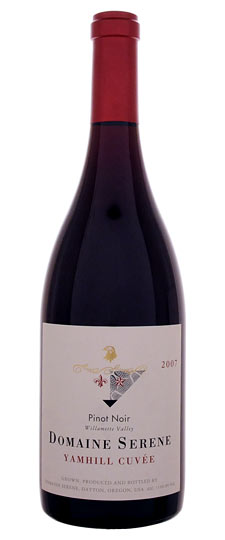
Domaine Serene 2007 “Yamhill Cuvee” pinot noir review

7 09 2010

Today we review a 2007 Oregon pinot noir that will set you back $40.

So here we have Domaine Serene’s “Yamhill Cuvee” pinot noir.  It costs $15 less than their Evenstad Reserve pinot, and guess what?  It may be just as satisfying.

So what first hits you about the Yamhill Cuvee?  Its aromas are lovely, but they won’t blow you away.  Upon first taste, you will know that you are drinking a very good red wine, but no single flavor leaps out: dark red fruits, oak and a little bit of floral, a little bit of earthiness.  The texture?  Nice.  Spicy?  A bit, sure.

To be honest, nothing really leaps out.  This is the kind of artistic offering that takes you beyond the normal reactions to wine.  You vault over things like “hey, it tastes like blackberries and raspberries,” and you instead arrive at, “that’s it, I’m getting that used Ferrari,” or “where’s the laptop, I’m going to book tickets to China and walk the Great Wall,” or “let’s get drunk and fool around in the downstairs bathroom.”  This wine doesn’t just taste good.  It inspires.

Let it breathe for an hour, have it with some good cheese and light crackers, and buckle up — you’re going to be hit with a really fun, totally involving experience.  So good that it’s hard for me to believe it costs only $40.  This is the first wine I’ve awarded both a “Best Value” and a “Best of the Best” designation.  I hope you get a chance to try it.

Domaine Serene “Yamhill Cuvee” pinot noir review

Highly recommended.


Murphy-Goode pinot noir review

6 09 2010

Today we look at a $12 pinot noir from California’s 2008 vintage.

Bottom line:  Too much alcohol, not enough pinot.  Not recommended.

Folks, if you want a very good and affordable California merlot or cabernet sauvignon, you should know about Murphy-Goode.   Their beige label with the dark purple capital letters does not vary from wine to wine, and neither does their compelling, very oaky, bold and very California style.  With the exception of their pinot noir, which sticks out like a sore thumb among their reds because “bold and oaky” just doesn’t apply very well to this grape.

This pinot is, yes, a bit oaky, very heavy on the alcohol, and doesn’t have much “pinot noir-ness” to it. 

Of course if I went to a party and they were serving Murphy-Goode pinot noir, I wouldn’t turn up my nose at it, but I would probably not be longing for glass after glass, either.  You figure, at a party, anything better than Yellow Tail or Barefoot is a bonus.   But the problem with Murphy-Goode’s pinot is that dang alcohol.  At 13.5% it doesn’t look too bad, but once you taste this dark purple medium-bodied red you will feel like you just inhaled a can of sterno.  

OK maybe it’s not that bad, but it is quite “hot” as the wine pros like to say.  For my $12, or even less, the Mark West pinot noir has yet to be beat.  I am sorry to say that a comparison of today’s wine with Mark West isn’t even a close contest.

Next!


Ponzi 2007 pinot noir review

4 09 2010

Today we review an Oregon pinot noir that costs $36 a bottle.

Well, well, well, another fussy, prissy review from your Wineguider, where an excellent red wine is nevertheless panned.  What the hell is wrong with me?  Basically, I love great pinot noir, and I want your experiences with “the good stuff” to be seriously rewarding.   Ponzi is rewarding, yes, but I think there are better pinot noirs that you can buy in the $35 price range.  The qualities of this panned, not-recommended wine: 

  • it’s very interesting
  • it’s gently spicy
  • it’s elegant
  • it’s medium-bodied
  • it tastes like blackberries, sort of, with some oak
  • it’s juicy but also dry, with no excess sugary sweetness, and no excess mouth-puckering tannins
  • its only downfall — it has a slightly thin and slightly sharp taste
  • and most importantly of all, it’s fun in your mouth.  Complex.  A quality shared by all truly good pinot noirs.  

So clearly, if you buy the 2007 Ponzi pinot noir, you are going to be happy.  Yet, I sit here and pan it.  But only because of the $36 price tag.  So, in my next few reviews, I promise to recommend what I think are even better pinot noirs in this price range.  I’ve been checking out Ponzi, on and off, for over 12 years. This 2007 pinot noir is the best that I have ever tasted.  And it is:

Not recommended.


PINOT TO THE PEOPLE! Mark West 2008 pinot noir review

1 09 2010

Today we look at the 2008 Mark West pinot noir from California, which costs $11 a bottle at most places, $9 at Total Wine.

You probably don’t really care if today’s wine tastes like cherries, boisenberries, or whatever — the main question is, how good is it?  Answer:  holy crap, it’s really damn good!   Mark West pinot noir tastes like real pinot.  This is an amazing feat in today’s world of inexpensive pinot-dom.  There’s a “kick” to it.  Some SPICE.  And even a little bit of complexity.  The website says “Pinot for the people.”  Yes!  This lovely red is Everyman’s pinot noir. 

You can taste more alcohol in this pinot than with some others, although the percentage is reasonable (13.8%).  Other flavors are floral and sort of strawberry-like.  It’s not too sweet, like some inexpensive California pinots (say, Mirassou), and it’s not bleached-out and generic, like many others (say, BV).  

If you want a good, affordable pinot noir, or a good wine for Thanksgiving — THIS is your wine.  If you want a “crowd pleaser” for a party where you’ll serve only one red, this is NOT your wine — but only because many people are not used to the unique flavors that pinot noir provides. 

So, is Mark West better than the 2009 Grayson Cellars pinot noir, which I recommended?  Yes.  Is it better than a $40 Oregon pinot noir?  Probably not.  But luckily Mark West is NOT $40.  In fact, I’m awarding it a “Best Value” designation.  Mark West pinot noir is: 

Mark West 2008 pinot noir reviewHighly recommended!


Five Rivers cabernet sauvignon review – NICE

13 08 2010

This review has been updated here.

Hi!  Today we’ll look at a red wine from California’s Central Coast, which sells for $11 a bottle.

Five Rivers cab used to be made with grapes from California’s Paso Robles area, and it really rocked for $11.  Now, with the 2007 vintage, Paso Robles has been replaced on the label with plain old Central Coast.  It doesn’t rock as much anymore, but it’s pretty darn good:  rich, with plenty of tannins, a “tight” taste, dry, but with some deep fruit, and a nice amount of oak.  It’s medium-bodied, mildly spicy, and overall, “strong.”  In fact, it tastes very close to the way it did when it was a Paso Robles wine.   How do they do that?

On the downside, it’s a bit generic, or even boring, in some settings.  It also might be too oaky for some wine lovers.  But it can serve as a great steak wine, or just a “de-stress after work” wine.  There’s something about Five Rivers cabernet that I just, like.

So there you have it.  This unassuming and mild-mannered California cabernet hits the right buttons for your Wineguider to make me want more and more, and so it is:

Five Rivers cabernet sauvignon review

Recommended.


Mirrabooka pinot noir review

12 08 2010

Today we review a 2006 pinot noir from Australia that costs anywhere from $9 to $15 a bottle, depending on where you get it.  I snagged it for $13.

OK, I obviously love an inexpensive wine as much as the next guy, but when it blatantly sucks, I still get rattled, no matter how cheap the bottle was.   The 2006 Mirrabooka pinot noir from Australia’s Victoria region is fairly cheap, and yes, it blatantly sucks.  

It smells bad, like something you left in your kitchen sink way too long — sharp, and sour.  But its taste is where the suck really shines through.  Ever tried red wine that’s been open too long?   That’s what Mirrabooka tasted like after it had been open for about 4 hours.  And it wasn’t even open the whole time — the screw cap was put tightly back in place.  Specifics?  Sour.  Very minerally.  Sharp, like they threw some vinegar in there.  (Hey!  Why not?)  Very acidic and bright, with hints of some flavors that I don’t care enough about to write out.

CAVEAT:  I’ve had 2 bottles of this pinot, from the same store, and it’s possible that their stock was damaged in some way.  I will seek out this wine in the fall to reassess, and hopefully will have kinder words to say.

As I contemplate how I will obtain a badly needed attitude adjustment after choking down this Aussie from much too far down under, I will remind myself that this one is:

Not recommended.


Greg Norman shiraz review – TOUCHY!

10 08 2010

Today we review an australian red from 2006 with the name of a famous golfer, which can be had for $14 but more often sells for $15-16.

Bottom line: a winner.  This dry shiraz does many things right for a $15 wine.

I am usually sort of bored, or even disappointed, with Greg Norman wines.  But this 2006 shiraz was really cool.  Introduced to me by the very friendly Jessica at Firebirds Wood Fired Grill in Delaware, it was subtle, very dry, a little bit earthy and moderately spicy with some kickass tannins.  Although it’s not a giant fruit bomb like many other shiraz wines from Australia, it does have some dark fruit for you: the label says “dark plumb and black cherry” — sure, I’ll go with that. 

But fruit is not the main event here.  In fact, this wine from the famous golfer (yes, the blond guy — it’s really his winery) is almost like you combined a medium-bodied Australian shiraz with a dry and delicious Italian red.  It’s more about great texture than it is about flavor.  And I have to mention the label — it says that these grapes are grown on “shallow red soils overlying hard limestone.”  Wow, now there’s something you don’t hear every day.

Finally, one word of advice: serve this one slightly chilled.  As in, stick it in the refrigerator for 20 minutes before you enjoy.

Greg Norman shiraz reviewRecommended!


Estancia pinot grigio review

6 08 2010

Hi!  Today your wineguider reviews a $12 pinot grigio from California’s 2008 vintage.

This review is difficult to write because I usually love Estancia wines.  They aren’t awesome, but most perform above their price class.  I don’t know what happened here, but I think their choice of language on the back label almost warns you about what you’re in for.  The first sentence is:

“Simply put, Estancia pinot grigio is better than all the rest.”

What a crock of shit.  Sorry, but instead of “bliss” or the other goodies mentioned on the label, you mainly get a mouthful of confusion.  It tastes like they might have put some chardonnay or sauvignon blanc in there, to make it interesting.  Well, it is kind of interesting, but it doesn’t make you want more and more.  

As we have said, pinot grigio usually tastes very clean.  Estancia doesn’t.  Although its various flavors give you “more” than a typical pinot grigio, and its slight mineral afterfeel on your tongue is nice and pleasant, I preferred the dirt-cheap Jacob’s Creek pinot grigio, reviewed below, which costs, I don’t know, like, 45 cents.  Surprisingly, this Estancia wine is:

Not recommended.

Next!


GreenPoint shiraz review

3 08 2010

Today we review a shiraz from Victoria Australia that can be had for $17 a bottle (although Total Wine charges $22).  But holy cow, you can get it for $11.79 at wine.com.   What’s up with this one??

I don’t know, but I really like it.  As the label brags, it really does have character.  Often, a shiraz from Australia is dark, rich, purple, and even a little bit chewy.  But GreenPoint is medium-bodied, ruby red, lighter than you expect, a little sweet for a shiraz, and elegant.  It’s a little bit spicy, and has a little bit of smoke, making it a perfect for very spicy food, or just sipping.   Juicy, warm, spicy, and completely yummy — there’s a lot going on in this glass for $11.79.

A lot going on for your tastebuds, that is.  If you just smell it, you get a face full of alcohol, even after the bottle has been open for a while.  But who cares.  If you love shiraz and the dog-hot summer has been keeping you away from this grape, I suggest you try the 2006 GreenPoint.  If you can find it.    GreenPoint shiraz review

Recommended.


Black Opal shiraz cabernet review

27 07 2010

Today we review an Australian shiraz/cabernet blend that costs only $7 a bottle.

Since we just reviewed two white wines that are “stupid cheap,” I figured we needed a red.  Enter 2007 Black Opal shiraz/cabernet.  Since I almost always hate cheap red wine, I have to admit that I was surprised that Black Opal was even drinkable.   There are several new very cheap red wines flowing from Australia these days, including the confusingly similar “Black Swan,” and as you would expect, most aren’t that great. 

But here we have a rich, drinkable red that is “full of berry, pepper, and spice aromas” (so says the winery’s website, and I agree) that also gives you some spice and pepper on your taste buds, along with very ripe dark fruit flavors.  Tannins are there, sort of.  I don’t really agree with the website’s claim that this is an “elegant” or a “full bodied” wine, but hey, their marketing people have to earn a living just like anybody else. 

I’d say this is a medium-bodied red that doesn’t really taste like cabernet or shiraz, but rather just tastes pleasant.  It isn’t silky or complex, but it doesn’t reek of cheapness either.  If you’re on a tight budget, I think you’ll be pleasantly surprised.  If you don’t like it, please e-mail me any $7 reds that you do enjoy, I’ll be curious!  This super-affordable dark berry down under is:

Black Opal shiraz cabernet review

Recommended.


Jacob’s Creek pinot grigio review: Cheap thrill for summer

24 07 2010

Today we review a pinot grigio from Australia that sells for $6 at Total Wine.

This summer, it’s hot out there.  It feels like you’re walking around in a waffle iron.  To make matters worse, it’s 2010.  So your bank account is a mere shadow, a faded husk, of the account it once was.  And you’re super stressed, because you’ve either been let go, or they let everybody else go and you’re stuck doing five times more work.

You need — no, you deserve — some cold, cheap, delicious white wine, my friend.  I think I have something for you.

Jacob’s Creek 2008 pinot grigio is best served not merely chilled, but cold.  Check.  It’s $6.  That’s cheap.  Check.  And although it’s not fully “delicious,” it’s pretty darn good.  Two and-a-half out of three ain’t bad.  Now, pinot grigios are kind of tricky.  They are sometimes so light and clean that it’s like you’re drinking alcohol-flavored water.  It’s hard to find one that is actually delicious, and many are disappointing, such as Santa Margherita, which is ragingly popular, sells for $22, and should cost $7.99.  (See also:  Bose speakers; Enron common stock).

This one is super light and clean.  No complexity.  No depth.  No sweetness.  But it’s nicely tart and citrusy.  Very refreshing.  And it’s not alcohol-flavored water.  Plus, you get a whole bottle for the cost of two frappuccinos.  Sold!

Jacob’s Creek pinot grigio review

Recommended.


Anakena sauvignon blanc review

23 07 2010

This review has been updated here.

Today we review a white wine from Chile that costs only $8.  I found it at Total Wine.

Anakena’s price is what makes it hot.  There just aren’t many $8 wines that taste this normal and civilized.  This 2009 sauvignon blanc is light, and a little bit tart and minerally.  It tastes more round and slightly sweeter than some sauvignon blancs.  It has some pleasant citrus, but it’s not a mouth-puckering All-Grapefruit Assault.

Is there a downside?  Anakena doesn’t have as much “zing” for your taste buds  as Oyster Bay, which I reviewed here, and which is 25-35% more expensive.  But on the bright side, Anakena is easy to drink and clean, leaving less mineral feel behind than Oyster Bay.  Even brighter is Anakena’s price.  Gotta love it.

If you love white wines and a great value, THIS is your summer white.  And if you have been drinking very sweet white wines, and you want to “get more serious,” this is a really great starting point.  Anakena sauvignon blanc is hereby awarded a “Best Value” designation, and is:

Anakena sauvignon blanc review

Recommended.


Grayson Cellars pinot noir review

22 07 2010

Today, we review a 2009 California pinot noir that sells for $11 a bottle.

The 2009 Grayson Cellars pinot noir is a good value at $11, but something bugged me when I first tried it.  I couldn’t figure out what it was, until I spoke with Alexis at Capers & Lemons, a modern Italian restaurant in Wilmington DE.  She mentioned that she likes it very much, but hadn’t in the past.  Bingo!  That’s what it was.  I kept thinking, “this stuff isn’t supposed to be this good . . . “, but I kept sipping it, and liking it.  That’s because, as Alexis reminded me, a few years ago this stuff wasn’t as good — still a decent wine, but unexceptional. 

What’s changed?  The 2009 Grayson Cellars does a fairly good job of actually tasting like pinot noir.  I know that sounds strange, but most cheaper pinots taste like something else.  They might taste good, but they are often too sweet and you miss that spicy, layered, floral, earthy, gentle-yet-potent pinot character.  Grayson Cellars wins the “most improved” award of 2010.  NOTE:  I preferred the 2009 over the 2008.

Specifics?  It smells like black cherries.  In the mouth it is easy drinking, with a variety of berry and earthy flavors with a touch of oak, making it nicely interesting for an $11 wine.  However, one bottle I tried had no black cherry aroma and was less friendly, with too much alcohol smell and taste.  Why?  Maybe it’s this year’s blast-furnace summer, as wines literally cook on their way to the store, being altered in diabolical ways.  Pinot is famous for being especially sensitive in transport.  I will try it again in the fall to confirm, but for now I’ve tasted enough good Grayson Cellars to decide that this wine is:

Recommended.

Grayson Cellars pinot noir review


Oyster Bay sauvignon blanc review

21 07 2010

Today we review a white wine from New Zealand that sells for $11 bottle — $10 if you get it at Costco, or various online merchants.

Even as Oyster Bay approaches room temperature in your glass, it keeps its cool.  This wine from down under (I assume that applies to New Zealand too?) (if not, it should) is a bit minerally, has a lot of fresh citrus flavor, and is nicely crisp, dry and refreshing, while still providing some nice fruit overtones.  

I don’t like to say what foods a wine tastes like, because it’s almost always wrong and it sounds pretentious, but Oyster Bay is a typical sauvignon blanc.  So, “wine people” will expect me to mention that it has flavors of grapefruit — although they are mild in this case — and there are hints of lemon-lime.  It also has a little bit of “green grass,” but less than many other sauvignon blancs. 

Although not officially complex, Oyster Bay is plenty interesting.  In fact I would call it a crowd-pleaser, because it gives you just a tiny bit of “fireworks on your tongue,” and I can’t imagine anybody hating it, unless they require serious sweetness.  If you need to buy a lot of white wine for an occasion, I’d consider this one, with something else for the sweet crowd (or, a chardonnay . . .) .  I would almost name this a “best value”, but Nobilo sauvignon blanc, reviewed earlier, has less “limestone deposits” feel to it, and is a little better overall at only $11.

Recommended!

Oyster Bay sauvignon blanc review


Chateau Montet sauvignon blanc review

19 07 2010

Hello there! Today’s review is being brought to you by a Guest Reviewer, That Girl.  It is my pleasure to review a wine that Wineguider would not fall passionately in love with, but which J’adore!

Today we review a Sauvignon White Bordeaux wine from France, produced by Chateau Montet, an arm of Chateau Haut Guillebot, located in the Dordogne region of France.  It costs $8.99. Translation: It’s a white wine from the South Eastern region of France and it’s inexpensive.

Bottom Line: Don’t let the price fool you; it’s a buy, buy, buy. If I could stock my bedroom closet full of this stuff, I would (but where would I put my shoes?).

The pink label pays homage to its female owner heritage; beyond that, the label is fairly bla. The wine is not.

Warning: If you like your wine sweet, read no further; this wine is not for you. If on the other hand, you like your wine as dry as a calcium block with a hint of grapefruit, go for it. 

Oh dear. It seems I’ve broken Wineguider’s cardinal rule about no Wine Snob talk. Carrying on… this wine reminds me of sitting on a porch in summer, under a perfect sky, my feet up … with a cool drink. In France. Where I don’t live. This wine makes me forget that I have work on Monday morning. And that’s what I love about Chateau Montet’s Sauvignon; its timelessness and ability to transport.

What it is not: Sweet. Complex. Expensive.

What it is: Dry. Light. Simple. Grapefruit overtones with a mineral finish that lingers on the tongue. Hits all the right bells, without blowing my budget. At $8.99, I can buy two; one for my friend’s party and the other for my bedroom closet.

Highly recommended.

Chateau Montet sauvignon blanc review


SMACK TALK at another blogger, about Lange vineyards in Oregon

18 07 2010

Lange pinot noirToday I respond to a guy on the west coast with a blog called Beyond the Bottle.  He reviewed Oregon’s Lange vineyards, maker of some seriously great pinot noir.  He rated them a 2 out of 5.   (???)   His reason: the tasting was $10 and they wouldn’t refund his money if he bought their wine. 

Let’s get one thing straight: $10 for a tasting at Lange is worth it.  Big time.  They let you try 5 different wines, and it’s serious stuff — up to $60 a bottle.  The five tastes add up to more than a full glass.  Now, what would a full glass of Lange wine cost you at a restaurant?  Definitely more than ten bucks — probably $13 or $15. 

Plus, buying a tasting at Lange lets you hear from the people who make the wine, or at least people who work with the winemaker.  That’s worth a lot to me.  I mean, imagine test-driving a Porsche with one of their head engineers.  I remember my first tasting at Lange was hosted by. . .  drum roll please . . .  Don Lange. 

Anyway, the blogger accused Lange of  “highway robbery” and didn’t mention how any of their wines tasted.  Read his review here.   

He disabled comments, so I sent him an email:

“Hi,

I see you are somewhat upset after visiting Lange, which you rate a 2 out of 5.  Sorry about that.  After visiting Oregon and its wine country several times, I believe Lange is one of the finest wineries in the state. For my money (wink wink, let’s remember what’s really important here), they are in fact the single best. Their pinot noir introduced me to the concept of really high end wine, and in my journies since then (12 years) they have yet to be bettered. 
 
I am sorry that you were so put off by having to pay for their wine that you were not able to actually review their wine.  For example, their $17 pinot noir is sort of weak and disappointing, their reserve pinot is more robust and even more disappointing because it costs more and doesn’t taste that great, their Estate pinot noir is again more robust but also very mature, dry, and almost challenging, their Three Hills Cuvee pinot noir is a violent orgasm of multiple pleasurable flavors in your mouth, and their Freedom Hill pinot, at a very dear $60, is perhaps the single best wine at this price in the known universe, with layers, and layers, of deep, sensual complexity. 

With this winery, it really is all about the wine.  I figure, if I spend $10 on tastings, who cares?  In fact it appears you are so interested in receiving something for nothing that you were briefly incapacitated.  Tell you what, why don’t you let me paypal you 20 bucks to cover your first visit, and a return visit, and go back and just open your mind and your palate to the actual wine that Lange is producing — I am sure that your readers would greatly benefit.

Cheers,

Andy”

If he replies, I’ll seek permission to post it.


Stags’ Leap merlot review

15 07 2010

Today we review a merlot from Napa Valley, California that costs $40 a bottle.

OK this is a ridiculous review, because I am going to “not recommend” a very, very good wine.   The problem is the price.  The wine is the 2006 Stags’ Leap merlot.  Big, oaky, with kickass tannins YET bursting with juicy dark fruit flavors all over the place, and silky smooth.  And organic.  Once you let it breathe, this wine smells and tastes very natural, very much “off the farm,” with all kinds of interesting notes calling for your attention.  Stags’ Leap is definitely not your typical processed, corporate, red juice.  Which is what you’d expect, because the Stags’ Leap area of Napa Valley is some of the most high-fallootin’ grape farmland in the entire world.

As with any very good wine, drinking this merlot is like having an artist’s palette explode in your mouth.  You suddenly realize why all the $10 wines that you have been drinking were priced that way — because (compared to the really good stuff) they are bleached out of real flavor and are overly simplistic or “one flavor only.”  

But here’s the thing — at $40, I expect something seriously compelling.   The Stags’ Leap is truly lovely, but it’s really just a great merlot.  If it were $25, it would merit a huge recommendation.  So there you have it.   A very, very good wine, which is:

Not recommended.


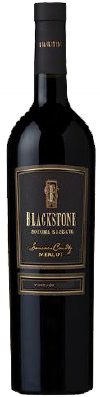
Blackstone Sonoma Reserve merlot review

12 07 2010

Today we review an upgrade to an old favorite value, Blackstone merlot.  The Sonoma Reserve is $15-$17.

Before we begin: a “reserve” is supposed to be a winemaker’s really good stuff, from the days when each year’s best juice was kept off the market (reserved) for the vintner to enjoy.  The word can be abused.  For example, the regular, everyday Kendall Jackson chardonnay is called “Vintner’s Reserve.”  It’s their bottom-of-the-line.  So wait, it’s ALL reserve?  Hmm.

Blackstone is not playing these games.  I just tried their 2007 Sonoma Reserve merlot, and WOW.  (NOTE: previous years of the reserve were good, but not THIS good.)  This is a great example of a California merlot.  It’s big, but still medium-bodied, so it won’t overpower your food.  Spicy.  Super dark red — almost black (like the label).  A silky texture.  Juicy, but balanced by plenty of tannins.  Dry, with a bit of oak, but nothing excessive. 

It seemingly did nothing wrong, to the extreme.  At only $15, is this Merlot Perfection?  I’m leaning toward “yes”, but at any price under $20, this ’07 Sonoma Reserve merlot is an absolute, fall-on-your-face, flat-out “Best Value.”  

Blackstone Sonoma Reserve merlot review

Highly recommended.

UPDATE:  Yikes!  The 2009 isn’t so hot, at least this bottle on my kitchen table right now isn’t.  I will come back to reconfirm, but for now it looks like the 2007 was a gem.


Cupcake merlot review

9 07 2010

Today we review a nice little merlot from California that costs $10 a bottle.

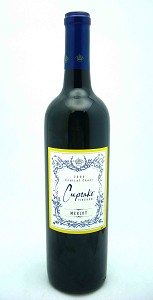
As we noted previously, Cupcake has a sort of unfair advantage — you can’t help thinking about cupcakes or at least dessert when you try it.  So, like the Cupcake cabernet reviewed earlier, the name may have helped this merlot achieve a recommendation.  Just being honest here.  Cupcake merlot is warm, soft, round, medium-light bodied, and tastes like you expect a California merlot to taste, with just a slight emphasis on the juicier, sweeter side of things.  

It hits you with flavors of dark berries and lays some mild tannins on your tongue. Some California merlots will choke you with too much oaky flavor.  Cupcake does not.  Everything about this wine is moderate, medium, and pleasant.

However, I’ve had 2 bottles that were not so great.  They tasted bleached out and a little bitter.  I’m willing to tolerate that with a wine that is this inexpensive.  But honestly, with Cupcake at $10, I think I would instead select the $11 Zen of Zin most times.  Even though this is not a raving, enthusiastic recommendation, this merlot is:Cupcake merlot review 

Recommended.


Zen of Zin zinfandel review

8 07 2010

Today we review a Sonoma California zinfandel made by Ravenswood  that is $11.

OK, this is a deep, dark wine that smells like coffee and tastes like a typical, smooth, semi-oaky, warm California red.  Unlike lesser zinfandels, Zen of Zin is not a fruit bomb — it has real tannins, and a dry finish.  It’s not complex or superb, but there’s almost nothing wrong with it.  Nothing sticking out here.  Nothing poking your taste buds there.  It’s rich, delicious and affordable.  THAT makes Zen of Zin a “Best Value” (hence the guy at the slot machine).

This is all painful to admit, because I am so turned off by the label.  It proudly commands, like a fat redneck who loves champagne:  “POUR OFTEN:  Especially among friends.  PAIR BOLDLY:  With prime rib, pork, and chocolate.  EXPERIMENT FREELY:  Bring to a party full of Chards.  SHARE WISDOM:  And laughter.  Always laughter.”

Um, OK.  Did Zen of Zin outsource the label to spammers on AOL, who write about dancing like nobody’s watching?  Do we need to be told to pair this wine BOLDLY with pork?  Before this review degenerates any further, I’ll just pour yet another glass of Zen of Zin, and remind myself that this wine is:

Recommended!Zen of Zin zinfandel review


Hob Nob pinot noir review

5 07 2010

Today we review a pinot noir from France that costs only $11 a bottle.  [EDIT:  I’ve now seen it for just $8, which caused a re-visit to this review, right here.]  

Here’s the deal with pinot noir — it’s very hard to grow, it’s difficult to make into great wine, and it’s very hard to ship without damage by way of excessive heat or jostling around (“bottle shock”).  So why bother?  Because when it comes together, I believe pinot noir is simply better than any other wine.

Hob Nob pinot has some things going for it.  It can be a crowd pleaser for those who are just beginning to enjoy wine, or those who prefer something on the sweet side.  It is robust — not a wimpy see-through pink in color, like many pinot noirs.  And it has some definite taste notes — deep, dark cherries and black cherries — so it doesn’t taste like generic and totally nameless “red wine”, as many cheap pinot noirs do.  

The problem is that Hob Nob doesn’t really taste like pinot noir.  And, it is inconsistent.  Some bottles that I’ve tried have been simple in a “cheap wine” way, and blatantly too sweet.  Although many will still enjoy it, Hob Nob doesn’t quite merit a recommendation.  If you want a fun red wine with some sweetness and you don’t really care if it tastes exactly like pinot noir, you should try Hob  Nob — it’s a very good bargain.  But those in search of a great bargain “pinot noir” should check out the wine which I reviewed: here.

Next!


Pine Ridge chenin blanc/viognier review – INTERRUPTED

1 07 2010

Today we review the very affordable $11 2008 – WOW!

— sorry,  this review is being interrupted because I’ve just tasted a flat-out delicious and obviously “Best Value” white wine.  Pine Ridge’s chenin blanc/viognier blend from California is balanced, interesting, and tastes like pears, citrus, melons and green peppers.  Yes, green peppers.  When I say “balanced” I mean that the sweetness from the viognier is countered nicely by the citrus acidity in the chenin blanc.   This stuff is unbelievable.  And it’s only $11?  WTF?

Just buy it — trust me.  

See, I’m like Colin Powell, except I’m not an impressive war leader, and you’re not the white house press corps trusting the U.S. military for the first time since Viet Nam.  (And, instead of caring about Washington news, you’re mainly looking to get buzzed on white wine.   Wait, that makes you EXACTLY LIKE the white house press corps.) 

Highly recommended.Pine Ridge chenin blanc/viognier review


gotham Barossa Valley cabernet sauvignon review

29 06 2010

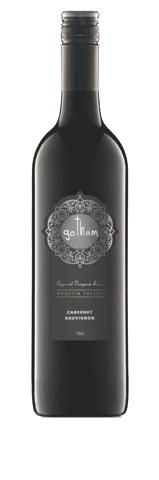
Today we review gotham 2008 Barossa Valley cabernet sauvignon, which sells for $15 at Premier Wine in Wilmington, Delaware. 

Another big wine from Australia, this 2008 cabernet is powerful, luscious, peppery, very warm, and a deep, dark cranberry red in color.  It has definite fruit, but it’s not sweet.  It has some big, bad tannins.  A texture like a cup of strong coffee that you threw a couple of espresso shots into. 

And it’s clearly a cabernet.  On steroids.  It’s not super complex, but there is plenty here to keep your palate entertained. As well as your nose — the aroma is a combination of dark berry desserts and strong spices.  Let this one breathe — it was noticeably better on day 2.

Is this wine bigger and better than the powerful Jip Jip Rocks, Jacob’s Creek reserve and Incognito reds, reviewed earlier?  Bigger, yes.  Better:  Mmmmaybe.  It’s SO big and powerful that many wine lovers may be turned off.  But if you are all about big, this is your wine. 

Enjoy!gotham Barossa Valley cabernet sauvignon review


Three pinot grigios reviewed

28 06 2010

Today we review 3 pinot grigios: Yalumba ($12), Adelsheim ($15), and Albino Armani ($18).

Bottom line:  Yalumba and Adelsheim are not recommended, based on taste.   Albino Armani is a very nice pinot grigio, but its price makes it a little bit difficult to recommend.

Before we begin: pinot gris and pinot grigio are just two different names for the same white wine grape.   The name used usually depends on the location of the winery — for example, pinot “grigio” is usually used in Italy and California, pinot “gris” in France and Oregon.

1.

Yalumba pinot grigio is Australian and costs $12.  It’s a very dry white wine with lots of acidity and minerality but not much in the way of depth, complexity, or fruit.  More importantly, overall it just isn’t delicious.  A friend who has a great palate noticed a slight aroma of urine. (Yikes.)  The first time I tried it, I agreed.  After a few more encounters with Yalumba I don’t get that anymore, and its clean taste has grown on me a bit, but it’s still not quite good enough to recommend. 

However, I can imagine somebody who really loves dry and minerally white wines being OK with the Yalumba, pairing it with shrimp, sushi or spicy roast chicken. 

2.

Adelsheim pinot gris is from Oregon and costs $15. It is very hard to describe, except that it is definitely not yummy.  In fact, it is awful.  To its credit, it’s not overly sweet, or overly acidic… it doesn’t taste like feet, or anything else that is remotely familiar… and its malignant flavor profile doesn’t linger.  Its minerally texture does linger, but only a little. 

Since I generally respect Oregon wines, I shared the Adelsheim with some friends to see what they thought.  It was universally hated.  I wish I could think of something truly good to say about this wine.  Wait — the label is beautiful, and features a painting of a woman by winery co-founder Ginny Adelsheim.  There!

3.

Albino Armani pinot grigio is from Italy and costs $18 at Total Wine.  It is very pleasant, easy to drink, and has a great balance of sweet and citrusy fruit against mild acidity.  It smells wonderful, with fresh, tropical scents.  And it sort of lights up your mouth.  Nice.  I can’t imagine anybody hating this wine, but I don’t think it is a massive crowd pleaser or incredibly delicious  as a pinot grigio, either.

If Albino Armani were $10 a bottle, I would DEFINITELY recommend it.  At $18, it’s a much closer call.  I think there are better white wine values.   

So, if cost is not a big issue for you, by all  means try the Albino Armani.  I think you’ll be happy you did.  If cost is more important, you can do better with other white wines.  I’ll search for a better value pinot grigio to recommend soon, but previously reviewed white wines that are better values include Nobilo sauvignon blanc and Bree riesling.

Next!


Espiral vinho verde review

27 06 2010

Today we review a white wine from Portugal available at Trader Joe’s for the remarkable price of $4.

Let’s be honest, at this low price, a wine doesn’t have to do very much to achieve a recommendation.  As long as it doesn’t suck, it should be recommendable.  (In fact, this wine was featured in the “Cheap Wines That Don’t Suck” column in the San Francisco Weekly.)  But this wine actually does some things very well.   

Espiral vinho verde is perfect for a starter wine at a summer party.   “Starter” meaning that the guests are just arriving, it was hot as a firecracker outside, and they are saying hello and getting comfortable.  Why does Espiral work here?  It’s light.  REALLY light.  And it’s fun, because it’s a little bit bubbly.  Effervescent.  Spritzy.  It’s also fun because, as my foodie friends who introduced me to Espiral pointed out, it tastes like a green apple Jolly Rancher.  Finally, it’s very low alcohol, so it won’t bog anybody down as they begin to enjoy your party.

On the downside, depending on your tastes, this crisp white wine is very simple, lacking depth and “oomph”.  And it’s extremely dry.  Some people want their white wine to provide some ooey-gooey sweetness.   (Although I think some of these people will come around once you lay the Jolly Rancher comparison on them.)

Serve this one very well-chilled.  Enjoy!

Espiral vinho verde review


gotham “McLaren Vale” merlot review

26 06 2010

Today we review another big red from Australia, which can be had for $15 a bottle. 

Bottom line:  Does not taste like merlot and too sweet for yours truly.  Not recommended.

This 2008 merlot from Australia’s McLaren Vale (or valley) was recommended by a wine expert I have a lot of  respect for.   It has 14.9% alcohol, so you know it’s serious.  However, it also has a very non-merlot taste to it.  So it’s seriously “something”, but I’m not sure what.  The expert said that it tastes like old vine zinfandel.  

As for whether it’s enjoyable to drink, to me, it’s very heavy, very sweet, and doesn’t have enough complexity, tannins, spice, etc. to balance the sugar load.   Its primary flavor struck me as powerful and unusual for any wine, and I couldn’t put my finger on what it tasted like.  What WAS this mystery flavor? 

To be fair, I know two  people who enjoy this rusty red.  They call it fruit-forward, big, “on the sweet side,”  jammy, and a “jelly jar.”  Hmmm… jelly jar…  maybe that mystery flavor was a sort of alcohol-heavy orange marmalade.  Whatever it was, this wine just didn’t work for me.   

Next!


Georges DuBoeuf chardonnay review

25 06 2010

Today we review a white wine from France that sells for just $5 a bottle at the fabulous Premier Wine in Wilmington, Delaware.

This chardonnay is part of a line of very inexpensive french wines under the Georges Duboeuf label.  I think the chardonnay is the best of the line.  In fact, possibly the best restaurant in Delaware (Harry’s Seafood Grill, on the riverfront) uses this, re-labled, as their house chardonnay.  When I had it at Harry’s, I thought it was a solid winner.  When I tried it at home while staring at the dishes in my kitchen sink, some doubts begain to creep in.

It’s fruity, and does smell wonderful.  The taste has some real character and gives a balance of sweet and tart flavors.  If you’re not too picky and you love white wine, this might be the key to slashing your wine budget and putting a big, fat smile on your face.  But to me, it had a confused feel to it, an alcohol-heavy, sharp overtone that prevented it from being truly yummy, and so I’ve decided that this great value is unfortunately:

Not recommended.

Next!


Chateau Ste. Michelle Harvest Select riesling review

23 06 2010

We have called Chateau Ste. Michelle riesling from Washington state the “king” of inexpensive U.S. rieslings.  Today we review an “upgrade” to the king called Harvest Select, which sells for $10.

Before we begin, let’s talk about something important:  if you like sweeter wines, you should definitely be aware of Chateau Ste. Michelle’s “plain” riesling.  Selling at Total Wine for just $8, this stuff is a big deal because it is very drinkable, even for people who don’t usually drink wine, YET it is also very servable because it qualifies as “real wine” in snob circles.

Now, for 2 more dollars, you can buy the Harvest Select.  Mmmm, “Harvest Select”. . . the name just reeks of exclusivity — so wine country, so authentic, so, upper crust.  Unfortunately, if you buy this thinking, you have been fooled.   To be fair, the Harvest Select is an upgrade in one way: it has no troubling flavors at all.  The plain Chateau Ste. Michelle riesling cannot make this statement.  You could also argue that the Harvest Select’s sweet flavors are higher quality, more interesting, more umm. . . upper crust, than the plain riesling’s. 

But the plain version is more balanced.  Its awkward notes provide a little acidity and tartness.  Balance is where the Harvest Select falls on its sugary face.  There isn’t much to counter its powerful, heavy sweetness.  Don’t get me wrong, this is not terrible wine at all.  But my reaction, and the overall reaction at a recent wine tasting, was that it is too sweet and not interesting enough when compared with other wines in this price range.

Next!


Cupcake cabernet sauvignon review

22 06 2010

Today we review a California cabernet from the Central Coast region, which sells for $10 a bottle.

Cupcake red wines have some good mojo, because you’re already thinking of rich chocolate when you try them.  At least that’s what “cupcake” makes me think of.   This cabernet from 2007 is honestly nothing super special.  However, it doesn’t do anything terribly wrong, and its mild nature just makes it easier to polish off glass after glass.   Surprisingly, this California cab has just a touch of oak.  

There are mellow spices and tannins to be found, but it’s a bit bland if you’re having very flavorful food with it.   Unfortunately, it is also a little bit acidic in a not-so-good way.

Bottom line:  Cupcake cabernet is pleasant.  The name makes me think of chocolate when I’m tasting it.  And it only costs $10.   Sold.

Recommended.

Cupcake cabernet reviewCupcake cabernet review


Gato Negro malbec and merlot review

22 06 2010

Today we review two bargain reds from Chile’s Gato Negro, each of which can be had for just $4 a bottle: the 2008 malbec and the 2008 merlot.

Here’s the deal.  This stuff is cheap.  The malbec smells very strange, and tastes bad.  The merlot smells pretty good, and tastes bad.  This is the kind of wine that makes you grimace when you try it. 

You’ve probably heard more about Gato Negro as this year’s “two buck chuck” than any other wine.  I would say, don’t bother.  It’s not a miracle discovery to slash your wine bill.  It’s just cheap, crappy wine.

One caveat:  I haven’t tried the cabernet sauvignon.  I probably should, since I am panning these two.  I’ll come back and edit this once I’ve had the chance.

Next!


Incognito red wine review

20 06 2010

Today we review Incognito, a $15 red blend from the Michael~David Winery in California’s Lodi appelation which was recommended to me by the wonderful Mia at Premier Wine in Wilmington, Delaware.

EDIT (August 2010):  Sadly, Incognito now sells for $18 a bottle, so it is no longer a “Best Value”.

OK, if you like your red wine to be fruit-forward, powerful and super dark, this is your wine.  The 2006 Incognito is a blend of — I don’t know.  The mysterious label, true to the wine’s name, is silent on the subject, saying only that  it contains “primarily” Rhone varietals.  (Ugh: wine speak.)  However, the winery’s website reveals that it contains Mourvedre, Syrah, Petite Sirah, Cinsault, Carignane, Tannat, Malbec, Cabernet Franc and Grenache.

Whatever.  This stuff rocks.  It smells wonderful (blueberry and rhubarb pie?) and has a great balance of dark fruit and spice on your tongue.  It’s a bit complex, with lots of entertainment for your taste buds, but it’s nowhere near as complex as that list of grapes suggests.  It’s so heavy that it leaves a bit of aftertaste, but it’s a GOOD aftertaste.  And at 14.5% alcohol, it will rock your block.

Is Incognito bigger, warmer, and darker than the powerhouse reds reviewed below, Jip Jip Rocks Cabernet/Shiraz, and Jacob’s Creek Reserve Shiraz?   Yes!  Is Incognito the most powerful red I’ve ever tried?  No.  That award (or is it a booby prize?) goes to Gotham, which I will review soon.

Incognito red is highly recommended by your wineguider.  Enjoy!Incognito red wine review


The Birdman pinot grigio review

19 06 2010

Today we review a $10 pinot grigio made in California by Big House vineyards.

The Birdman is a fun wine with a crazy jail-themed label that makes it great for bringing to a party.  But don’t be fooled — the contents are serious.  This is no watery, weak pinot grigio.  Best served well chilled, it’s intense, refreshing, and good on its own, but better when paired with food.   That’s because The Birdman has some nice complexity, so it will enhance almost anything you are eating.  Subtle tropical flavors are followed by a tart, clean finish, with a zing. 

A nice feature:  if you are cooped up in chardonnay-only mode, this could be THE wine to help you break out.  Why?  Because  this powerhouse pinot grigio tastes like it has been injected with a good un-oaked chardonnay.  So for those who are stuck in the sub-basement of Kendall Jackson, Robert Mondavi and other chardonnays, here is a familiar-tasting, chardonnay-like key that could ease you out into different wines, better times and broader, sunlit uplands.

Finally, fans of sweet wine may be challenged by The Birdman.  It tastes a bit alcohol-heavy (13.5% content), and it’s more dry than sweet.  

Recommended.The Birdman pinot grigio review


Bree pinot noir review

19 06 2010

Today we review Bree pinot noir, a German red wine that can be found at Total Wine for $11 a bottle.

Bree pinot noir is not bad, it’s just not very good.  On the bright side, it’s very affordable, and you can drink it, even drink a lot of it.  It won’t make you grimace, and you won’t have the urge to spit it out, or take it to the sink and force it down the drain while swearing at it. 

The problem is, Bree is just too simple.  And too sweet.  There are several affordable pinot noirs in this price range that taste more like real pinot noir, and have a little bit of complexity.   This stuff is like a Stepford Wife version of pinot noir.  All the possibly troubling flavors have been removed, for your sterile, Disney-themed taste experience.  Smooth, drinkable cherry water, anyone?

The bottle is drop-dead gorgeous, but you can enjoy it far better when filled with the very nice Bree riesling, reviewed below.

Next!


La Chapelle de la Bastide picpoul review

11 06 2010

Today we review a $10 picpoul blanc, a French white wine. 

This white with the pretty green bottle and the difficult French name (La Chapelle de la Bastide Picpoul de Pinet 2008 …whew!) is dry and tart, with citrus and a hint of sweetness, but mostly a large dose of minerality.  It’s not QUITE like licking a block of calcium, but there is a clear mineral character and aftertaste to this wine.  Actually it’s more like an afterfeel left on your tongue.  It’s not for everybody, but I like it.

Will this wine change your life, with waves of delicious new flavors and deep complexity?  No.  But it’s only $10, so it’s definitely worth trying because it’s just so different.   I enjoy this on its own, and I can see pairing it with almost anything, other than a meat dish.  Pasta?  Sure.  Shrimp hors d’œuvres?  Absolutely.  Hummus?  A salad course?  Whatever!  And it’s always fun to bring to a party because the odds are very high that nobody else will have ever tried a picpoul (or, probably, even heard of it).  

How is it different from a sauvignon blanc?  It’s not as clean.  Unless you drink this picpoul ice-cold, it will make a definite statement on your taste buds and won’t let go as easily as a sauvignon blanc will.

Recommended, for a time when you want to try something different and affordable.

La Chapelle de la Bastide picpoul review


Jip Jip Rocks Shiraz/Cabernet and Jacob’s Creek Reserve Shiraz review

8 06 2010

Today we will review two big Australian reds.

Jip Jip Rocks (2008), $15:

First: you don’t want the cabernet.  And you don’t want the shiraz.  (They are drinkable, but merely average.) You want the shiraz/cabernet blend, recommended to me by Michelle at Premier Wine in Wilmington, DE.

Jip Jip is a hit because it tastes big — REALLY big — yet it is not overpowering.  It’s very fruit-forward, without being ooey-gooey sweet.  It has some mild tannins.  It’s  very warm, it’s very dark purple, and it’s delicious.  Its mere existence makes you think of steak.  And it has a cool name and zero “get used to it” phase: most red drinkers will like it right away.

However, Jip Jip is not layered or super complex.  And prior vintages were better.   Either 2008 was a so-so year, or Jip Jip is beginning to “dumb it down” by using cheaper grapes for greater profit as the brand becomes popular.   We won’t know which until next year’s vintage.  For now, it’s still very good, and I still buy it.

Jacob’s Creek (2006), $11:

Another red that I buy fairly regularly, the Jacob’s Creek reserve shiraz has been around a while.  It’s usually incredible for its low price, but it’s always at least good.  The goodness-to-dollars ratio is so exceptional that I have deemed it a “Best Value” (hence, the guy laughing at the slot machine).  It’s a very deep and dark red in color, very BIG, very warm, and utterly yummy.  However, it’s drier, smokier and spicier than Jip Jip, with more tannins.  You wouldn’t call this one a fruit bomb.

The Jacob’s Creek works well with food, or on its own.  One note:  you don’t want their regular shiraz.  You want the reserve.  Finally, Jacob’s Creek is not super complex, and the current vintage is not their best ever.

Which is better?  This year, for me, it’s Jip Jip, as its higher price would suggest.  But if you like smoky, spicy reds and you avoid juicy, fruit-forward wines, you’ll prefer the Jacob’s Creek.  Either way, you get wonderful bigness on a budget, without the excess oaky taste that is injected into so many California reds.

Both recommended!

Jip Jip Rocks Shiraz/Cabernet review

Jacob’s Creek Reserve Shiraz review


Nobilo sauvignon blanc review

4 06 2010

Nobilo Sauvignon Blanc reviewToday we review Nobilo’s 2009 sauvignon blanc, a white wine from New Zealand that costs $11 a bottle.

This crisp, citrusy wine is perfect for summer.  Even though it’s not sweet, it gives you a tropical feeling.  If you are not too experienced with wine, this is a great choice to begin “branching out.”   On a hot day, have a little wine tasting: open a bottle of Nobilo, and a bottle of something you normally drink, like a California chardonnay.  Have some grapes, or cheese and crackers to nibble on.  Compare the flavors you get:  If you’re like me, the chardonnay’s flavors will seem clogged up and unnatural when compared to the Nobilo.  California chardonnay … hmm, butter, and oak (or a feeling that you’re sucking on a two-by-four?).  Nobilo … mmm, flavors of lemon, melon, a hint of green grass and no trace of oak, butter, or Sterno.

Nobilo is delicious, tastes like a $20 wine, and is bound to be a hit with anybody who likes sauvignon blanc.  It’s a clear “Best Value” winner. 

Highly recommended.


Bree riesling review

3 06 2010

Today we will review Bree riesling from Germany, which I found at Total Wine for $12.

Rieslings are usually sweet — even “dry rieslings” are sweet to me — and this one is no exception, although it is less sweet than many other rieslings under $20.

The key word here is balance.  Bree is light, a bit sweet, and a little bit tart, both in subtle ways.  It doesn’t reach out and grab you like a super-tart sauvignon blanc.  Instead, it just waits there quietly and invites you back for another sip.  True, Bree is not very complex.  But if you want a complex wine, you normally won’t go for a riesling anyway.  Somebody who is just beginning to experiment with wine will probably find Bree riesling to be an easy and especially enjoyable introduction.

Comparing this German white to the King of Inexpensive U.S. Rieslings, Chateau Ste. Michelle (now only $8), the Bree comes out ahead.  The Bree tasted more balanced, and lighter.  It also felt consistent and whole.  In comparison, the Chateau Ste. Michelle tasted heavy and had some non-sweet flavors that “stuck out”.  These results make sense if you believe the conventional wisdom that Germany is THE place to go for riesling.  However, Bree is a full 50% more expensive, so it’s not really a fair comparison.  On its own, the Chateau Ste. Michelle still works. 

Finally, I was blown away by the bottle.  It seems like it should hold $80 worth of vodka rather than $12 of white wine.

Recommended!

Bree riesling review